
What Is Tai Chi?
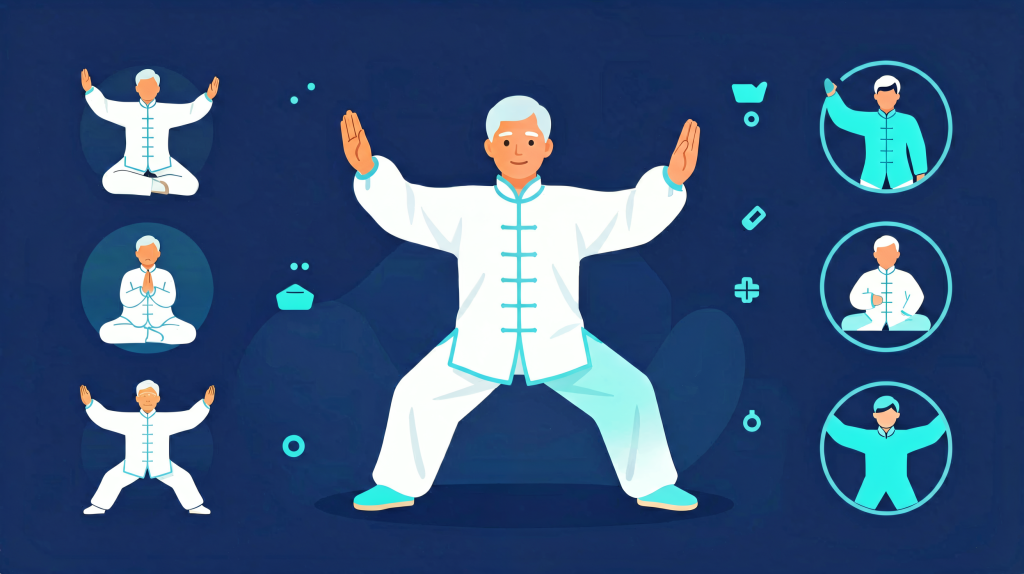
Tai chi is an ancient Chinese practice that combines slow, deliberate movements with deep breathing and meditation. Often described as “meditation in motion,” tai chi is gentle enough for people of all fitness levels, making it an ideal exercise for seniors.
The practice involves a series of movements performed in a slow, graceful sequence. Each movement flows smoothly into the next, creating a continuous chain of gentle exercise. Tai chi can be practiced sitting or standing, and most movements can be modified to accommodate different ability levels.
Benefits of Tai Chi for Seniors
Regular tai chi practice offers numerous health benefits for older adults:
- Improves balance: Tai chi strengthens the core and leg muscles, reducing fall risk by up to 45%
- Increases flexibility: Gentle stretching improves range of motion and joint health
- Built strength: Weight-bearing movements build muscle without straining joints
- Reduces stress: Deep breathing and meditation lower anxiety and improve mood
- Enhances coordination: Complex movements improve body awareness and control
- Supports heart health: Low-intensity cardio improves circulation and lowers blood pressure
- Boosts immune function: Regular practice may strengthen immune response
- Improves sleep: Many seniors report better sleep quality after regular practice
Tai Chi vs. Other Exercises
Tai chi offers unique advantages compared to other senior-friendly exercises:
- Low impact: Unlike walking or jogging, tai chi puts minimal stress on joints
- Mind-body connection: Unlike repetitive exercises, tai chi requires mental focus
- Adaptable: Can be modified for any fitness level or physical limitation
- Social: Group classes provide social interaction and motivation
- Indoor/outdoor: Can be practiced anywhere with minimal equipment
Getting Started with Tai Chi
Begin your tai chi journey with these steps:
Find a Class
- Check with local community centers, senior centers, or YMCAs
- Look for “beginner” or “introductory” classes
- Consider online videos or apps for home practice
- Look for classes specifically designed for seniors
What to Wear
- Comfortable, loose-fitting clothing
- Flat, non-slip shoes or practice barefoot
- Layers for temperature adjustment
Practice Tips
- Start with 10-15 minute sessions and gradually increase
- Focus on breathing and slow movements, not perfection
- Practice regularly—aim for 2-3 times per week
- Listen to your body and modify as needed
Types of Tai Chi
Several styles of tai chi are suitable for seniors:
- Yang style: Most common; slow, flowing movements ideal for beginners
- Chen style: More vigorous with alternating slow and fast movements
- Wu style: Gentle and upright, good for those with balance issues
- Health qigong: Simplified exercises focusing on breath and meditation
Safety Considerations
Tai chi is generally very safe, but keep these precautions in mind:
- Consult your doctor before starting any new exercise program
- Avoid deep knee bends if you have knee problems
- Practice on a flat, non-slip surface
- Don’t practice in extreme weather conditions
- Stop if you feel dizzy or experience pain
Frequently Asked Questions
How often should seniors practice tai chi?
For best results, practice tai chi 2-3 times per week for 20-30 minutes. Even brief daily sessions of 10 minutes can provide benefits.
Can tai chi help with arthritis?
Yes! Tai chi is particularly beneficial for arthritis sufferers. The gentle movements lubricate joints, improve flexibility, and strengthen supporting muscles without causing pain.
Do I need special equipment?
No special equipment is needed. Comfortable clothing and flat shoes are sufficient. Some classes may use props like fans or swords, but these are optional.
Key Takeaways
- Tai chi is a gentle, adaptable exercise ideal for seniors
- Regular practice improves balance, strength, and reduces fall risk
- Benefits include stress relief, better sleep, and improved coordination
- Start with beginner classes and practice consistently
- Tai chi is safe for most people with minor modifications as needed
This article draws on public health information from the National Library of Medicine (MedlinePlus) and the Centers for Disease Control and Prevention, and was reviewed for accuracy by the SilverWell Hub editorial team. It is for informational purposes only.