

Function
A healthy diet and lifestyle can reduce your risk for:
- Heart disease , heart attack , and stroke
- Conditions that increase the risk of heart disease, including high blood cholesterol , high blood pressure, and obesity
- Other chronic health problems, including type 2 diabetes , osteoporosis , and some forms of cancer
This article makes recommendations that can help prevent heart disease and other conditions that can affect the health of your heart. People who currently have a heart condition such as heart failure or other health problems such as diabetes, should talk with their health care provider about what type of diet is best. You may need to make certain changes to your diet that are not included in these recommendations.
What Are Recommendations?
📖 What Are FRUITS AND VEGETABLES?
What Are FRUITS AND VEGETABLES?
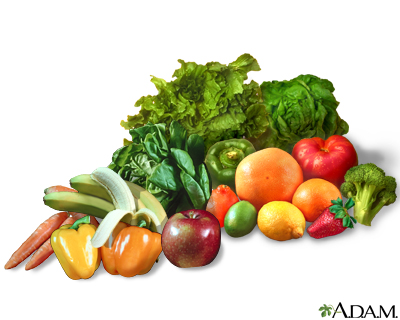
Fruits and vegetables are part of a heart-healthy diet. They are good sources of fiber , vitamins, and minerals. Most are low in fat, calories, sodium, and cholesterol.
Eat 5 or more servings of fruits and vegetables per day.
Get more fiber by eating whole fruits instead of drinking juice.
📖 GRAINS
GRAINS
Choose whole-grain foods (such as whole-wheat bread, cereal, crackers, and pasta or brown rice) for at least half of your daily grain intake. Grain products provide fiber, vitamins, minerals, and complex carbohydrates. Eating too many grains, especially refined grain foods (such as white bread, pasta, and baked goods) can cause weight gain.
Limit high-fat baked goods such as butter rolls, cheese crackers, and croissants, and cream sauces for pasta. Avoid packaged snacks that contain partially hydrogenated oils or trans fats.
📖 What Is EATING HEALTHY PROTEIN?
What Is EATING HEALTHY PROTEIN?
Meat, poultry, seafood, dried peas, lentils, nuts, and eggs are good sources of protein, B vitamins, iron, and other vitamins and minerals.
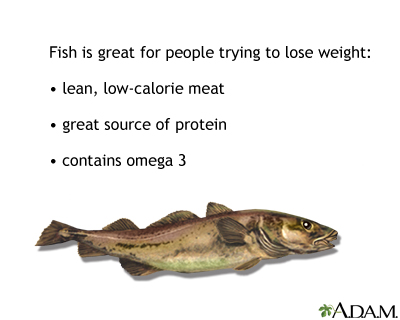
You should:
- Eat at least 2 servings of low-mercury fish per week.
- Cook by baking, broiling, roasting, steaming, boiling, or microwaving instead of deep frying.
- For the main entree, use less meat or have meatless meals a few times a week. Get protein from plant-based protein foods instead.
Milk and other dairy products are good sources of protein, calcium, the B vitamins niacin and riboflavin, and vitamins A and D.
📖 What Is FATS, OILS, AND CHOLESTEROL?
What Is FATS, OILS, AND CHOLESTEROL?
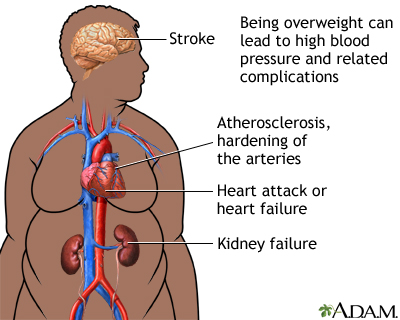
Some types of fat are healthier than others. A diet high in saturated and trans fats causes cholesterol to build up in your arteries (blood vessels). This puts you at risk for heart attack, stroke, and other major health problems. Avoid or limit foods that are high in these fats. Polyunsaturated and monounsaturated fats that come from vegetable sources have many health benefits.
You should avoid or limit foods that are high in saturated fats. Here are some examples:
- Foods with a lot of saturated fats include animal products such as butter, cheese, whole milk, ice cream, sour cream, lard, and fatty meats such as bacon.
- Some vegetable oils (coconut, palm, and palm kernel oils) also contain saturated fats. These fats are solid at room temperature.
- Limit trans fats as much as possible by avoiding hydrogenated or partially-hydrogenated fats. These are sometimes found in packaged snacks and solid margarine.
Think about the following when choosing a margarine:
- Choose soft margarine (tub or liquid) over harder stick forms.
- Choose margarines with liquid vegetable oil as the first ingredient. Even better, choose “light” margarines that list water as the first ingredient. These are even lower in saturated fat.
- Read the package label to choose a margarine that does not have trans fats.
Trans fatty acids are unhealthy fats that form when vegetable oil undergoes hydrogenation.
- Trans fats can raise LDL (bad) cholesterol level in your blood. They can also lower your HDL (good) cholesterol level.
- To avoid trans fats, limit fried foods, commercial baked goods (donuts, cookies, and crackers), and hard margarines.
📖 What Are the Best KEEP YOUR HEART HEALTHY OTHER Tips?
What Are the Best KEEP YOUR HEART HEALTHY OTHER Tips?
You may find it helpful to talk to a dietitian about your eating choices. The American Heart Association is a good source of information on diet and heart disease. Balance the number of calories you eat with the number you use each day to maintain a healthy body weight. You can ask your provider or dietitian to help you figure out a good number of calories for you.
Limit your intake of foods high in calories or low in nutrition, including foods like soft drinks and candy that contain a lot of sugar.
The American Heart Association recommends that sodium intake be no more than 2,300 milligrams (about 1 teaspoon of salt) a day with an ideal limit of no more than 1,500 mg per day for most adults. Cut down on sodium by reducing the amount of salt you add to food when eating and cooking. Also limit packaged foods that have salt added to them, such as canned soups and vegetables, cured meats, and some frozen meals.
Always check the nutrition label for the sodium content per serving and be sure to pay attention to the number of servings per container. Season foods with lemon juice, fresh herbs or spices instead.
Foods with more than 300 mg of sodium per serving may not fit into a reduced sodium diet.
Exercise regularly. For example, walk for at least 30 minutes a day, in blocks of 10 minutes or longer. Try to move at least 30 minutes during at least 5 days of the week.
Limit the amount of alcohol you drink. Women should have no more than 1 alcoholic drink per day. Men should not have more than 2 alcoholic drinks each day. One drink is defined as 12 fl ounces [360 milliliters (mL)] of beer, 5 fl ounces (150 mL) of wine, or a 1 1/2-fl ounce (45 mL) shot of liquor.
Diet – heart disease; CAD – diet; Coronary artery disease – diet; Coronary heart disease – diet
📖 What Are Patient Instructions?
What Are Patient Instructions?
- Cholesterol – drug treatment
-
 Healthy diet
 -
 Fish in diet
 -
 Obesity and health
 -
 Fruits and vegetables
 Healthy diet
 Fish in diet
 Obesity and health
 Fruits and vegetables
Arnett DK, Blumenthal RS, Albert MA, Buroker AB, et al. 2019 ACC/AHA guideline on the primary prevention of cardiovascular disease: a report of the American College of Cardiology/American Heart Association Task Force on Clinical Practice Guidelines.
Circulation.
2019;140(11):e596-e646. PMID: 30879355 pubmed.ncbi.nlm.nih.gov/30879355/ .
Boden WE. Angina pectoris and chronic ischemic heart disease. In: Goldman L, Cooney KA, eds.
Goldman-Cecil Medicine . 27th ed. Philadelphia, PA: Elsevier; 2024:chap 56.
Centers for Disease Control and Prevention website. Heart disease: prevent heart disease.
www.cdc.gov/heart-disease/prevention/ . Updated May 15, 2024. Accessed June 19, 2025.
Hensrud DD. Diet and nutrition. In: Goldman L, Cooney KA, eds.
Goldman-Cecil Medicine . 27th ed. Philadelphia, PA: Elsevier; 2024:chap 13.
Mozaffarian D. Nutrition and cardiovascular and metabolic disease. In: Bonow RO, Mann DL, Tomaselli GF, et al, eds.
Braunwald’s Heart Disease: A Textbook of Cardiovascular Medicine . 13th ed. Philadelphia, PA: Elsevier; 2026:chap 27.
US Food and Drug Administration. The new and improved nutrition facts label – key changes.
www.fda.gov/media/99331/download . Updated January 2018. Accessed June 19, 2025.
📖 What Is Test Your Knowledge?
What Is Test Your Knowledge?
Updated by: Stefania Manetti, RD/N, CDCES, RYT200, My Vita Sana LLC – Nourish and heal through food, San Jose, CA. Review provided by VeriMed Healthcare Network. Internal review and update on 07/01/2025 by David C. Dugdale, MD, Medical Director, Brenda Conaway, Editorial Director, and the A.D.A.M. Editorial team.
- How to Prevent Heart Disease
Frequently Asked Questions
Key Takeaways
Function
Heart disease , heart attack , and stroke Conditions that increase the risk of heart disease, including high blood cholesterol , high blood pressure, and obesity Other chronic health problems, including type 2 diabetes , osteoporosis , and some forms of cancer This article makes recommendations that can help prevent heart disease and other conditions that can affect the health of your heart. People who currently have a heart condition such as heart failure or other health problems such as diabetes, should talk with their health care provider about what type of diet is best.
What Are Recommendations?
What Are FRUITS AND VEGETABLES?
GRAINS
About the Author: This article was researched and written by the SilverWell Hub editorial team. It was reviewed by the SilverWell Hub editorial team.
Sources: This article is adapted from MedlinePlus, a service of the National Library of Medicine.
Disclaimer: This information is for educational purposes only. See our full Medical Disclaimer.
Published: July 18, 2026