

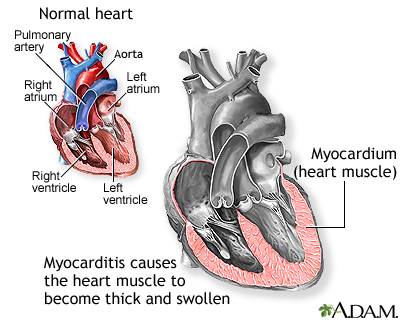
Myocarditis is inflammation of the heart muscle.
The condition is called pediatric myocarditis when it occurs in children.
What Are the Common Causes and Risk Factors?
Myocarditis is an uncommon disorder. Most of the time, it is caused by an infection that reaches the heart.
When you have an infection, your immune system produces special cells to fight off disease. If the infection affects your heart, the disease-fighting cells enter the heart. However, the chemicals made by these cells can also damage the heart muscle. As a result, the heart can become thick, swollen, and weak.
Many cases are caused by a virus that reaches the heart. These can include the SARS-CoV-2 virus (the virus that causes
COVID-19
), influenza (flu) virus, coxsackievirus, parvovirus, cytomegalovirus , adenovirus, and others.
It may also be caused by bacterial infections such as Lyme disease , streptococcus, mycoplasma, and chlamydia .
Other causes of myocarditis include:
- Reactions to certain medicines, such as certain chemotherapy medicines
- Exposure to chemicals in the environment, such as heavy metals
- Infections due to fungus or parasites
- Radiation
- Autoimmune disease
that cause inflammation throughout the body - Myocarditis following COVID-19 vaccination has been reported, but is very rare
Sometimes the exact cause may not be discovered.
What Are the Symptoms and Warning Signs?

There may be no symptoms. Symptoms may be similar to the flu. If symptoms occur, they may include:
-
Chest pain that may resemble a
heart attack - Fatigue or listlessness
- Fever
and other signs of infection including headache, muscle aches, sore throat, diarrhea, or rashes - Joint pain
or swelling - Leg swelling
- Pale, cool hands and feet (a sign of poor circulation)
- Rapid breathing
- Rapid heart rate
- Shortness of breath
Other symptoms that may occur with this disease include:
- Fainting
, often related to irregular heart rhythms - Low urine output
📖 What Are Exams and Tests?
What Are Exams and Tests?
Myocarditis can be hard to diagnose because the signs and symptoms often mimic those of other heart and lung diseases, or a bad case of the flu.
The health care provider may hear a rapid heartbeat or abnormal heart sounds while listening to the person’s chest with a stethoscope. A physical exam may detect fluid in the lungs and swelling in the legs.
There may be signs of infection, including fever and rashes.
A chest x-ray can show enlargement (swelling) of the heart. If the provider suspects myocarditis based on the exam and chest x-ray, an electrocardiogram (ECG) may also be done to help make the diagnosis. Heart biopsy is the most accurate way to confirm the diagnosis, but it is not always needed.
Also, a heart biopsy may not reveal the diagnosis if the small piece of heart tissue that is removed does not contain the suspected organism or other indicators.
Echocardiography (heart ultrasound) and cardiac MRI are also frequently used.
Other tests that may be needed include:
- Blood cultures
to check for infection - Blood tests to look for antibodies against viruses or the heart muscle itself
- Blood tests to check liver and kidney function
- Complete blood count
(CBC) - Special tests to check for the presence of viruses in the blood (viral PCR)
📖 How Is It Treated?
How Is It Treated?
Treatment is aimed at the cause of the problem, and may involve:
- Antibiotics to fight bacterial infection
- Medicines called steroids to reduce swelling and inflammation
- Intravenous immunoglobulin (IVIG), a medicine made of substances (called antibodies) that the body produces to fight infection, which may control the inflammatory process
- Diuretics to remove excess water from the body
- Low-salt diet
- Reduced activity
If the heart muscle is weak, your provider will prescribe medicines to treat heart failure. Abnormal heart rhythms may require the use of other medicines. You may also need a device such as a pacemaker, or implantable cardioverter-defibrillator to correct a dangerous abnormal heartbeat. If a blood clot is in the heart chamber, you will also receive blood thinning medicine.
Rarely, a heart transplant may be needed if the heart muscle has become too weak to function.
📖 What Is Outlook (Prognosis)?
What Is Outlook (Prognosis)?

The outcome can vary, depending on the cause of the problem and a person’s overall health. Some people may recover completely. Others may have lasting heart failure.
📖 What Are Possible Complications?
What Are Possible Complications?
Complications may include:
- Cardiomyopathy
- Heart failure
- Heart rhythm problems
- Pericarditis
📖 When to Contact a Medical Professional?
When to Contact a Medical Professional?
Contact your provider if you have symptoms of myocarditis, especially after a recent infection.
Seek medical help right away if:
- Your symptoms are severe.
- You have been diagnosed with myocarditis, and you have increased chest pain , swelling , or breathing problems .
📖 How Is It Prevented?
How Is It Prevented?
Treat conditions that cause myocarditis promptly to reduce the risk.
Inflammation – heart muscle
-
 Myocarditis
 -
 Heart – section through the middle
 -
 Heart – front view
 Myocarditis
 Heart – section through the middle
 Heart – front view
Centers for Disease Control and Prevention website. Coronavirus disease 2019 (COVID-19) vaccine safety.
www.cdc.gov/vaccine-safety/vaccines/covid-19.html . Updated January 31, 2025. Accessed February 5, 2026.
Cooper LT, Bozkurt B. Myocarditis. In: Bonow RO, Mann DL, Tomaselli GF, et al, eds.
Braunwald’s Heart Disease: A Textbook of Cardiovascular Medicine . 13th ed. Philadelphia, PA: Elsevier; 2026:chap 63.
Elliott PM, Olivotto I. Diseases of the myocardium and endocardium. In: Goldman L, Cooney KA, eds.
Goldman-Cecil Medicine . 27th ed. Philadelphia, PA: Elsevier; 2024:chap 47.
Knowlton KU, Anderson JL, Savoia MC, Oxman MN. Myocarditis and pericarditis. In: Blaser MJ, Cohen JI, Holland SM, et al, eds.
Mandell, Douglas, and Bennett’s Principles and Practice of Infectious Diseases . 10th ed. Philadelphia, PA: Elsevier; 2026:chap 86.
Updated by: Thomas S. Metkus MD, PhD, Associate Professor of Medicine and Surgery, Johns Hopkins University School of Medicine, Baltimore, MD. Also reviewed by David C. Dugdale, MD, Medical Director, Brenda Conaway, Editorial Director, and the A.D.A.M. Editorial team.
-
Cardiomyopathy
About the Author: This article was researched and written by the SilverWell Hub editorial team. It was reviewed by the SilverWell Hub editorial team.
Sources: This article is adapted from MedlinePlus, a service of the National Library of Medicine. Additional review by the SilverWell Hub medical review board.
Disclaimer: This information is for educational purposes only and is not a substitute for professional medical advice. See our full Medical Disclaimer.
Published: July 15, 2026
Frequently Asked Questions
Key Takeaways
What Are the Common Causes and Risk Factors?
What Are the Symptoms and Warning Signs?
Chest pain that may resemble a
heart attack Fatigue or listlessness Fever
and other signs of infection including headache, muscle aches, sore throat, diarrhea, or rashes Joint pain
or swelling Leg swelling Pale, cool hands and feet (a sign of poor circulation) Rapid breathing Rapid heart rate Shortness of breath Other symptoms that may occur with this disease include:
Fainting
, often related to irregular heart rhythms Low urine output 📖 What Are Exams and Tests?
What Are Exams and Tests?
How Is It Treated?
Antibiotics to fight bacterial infection Medicines called steroids to reduce swelling and inflammation Intravenous immunoglobulin (IVIG), a medicine made of substances (called antibodies) that the body produces to fight infection, which may control the inflammatory process Diuretics to remove excess water from the body Low-salt diet Reduced activity If the heart muscle is weak, your provider will prescribe medicines to treat heart failure. Abnormal heart rhythms may require the use of other medicines. You may also need a device such as a pacemaker, or implantable cardioverter-defibrillator to correct a dangerous abnormal heartbeat.