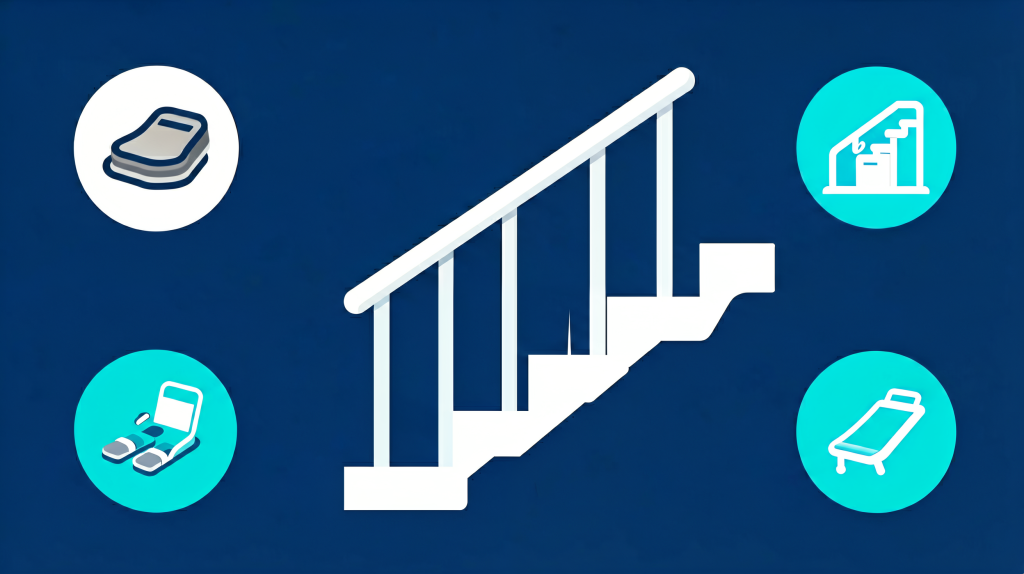

Why Stair Safety matters for Seniors
falls are the leading cause of injury among older adults, and stairs are one of the most dangerous areas in the home. According to the CDC, about 3 million older adults are treated in emergency departments for fall injuries each year. Stairs require balance, coordination, and strength that can diminish with age, making them particularly hazardous.
Creating a safe stair environment at home can significantly reduce your risk of falls and help maintain your independence.
Common Stair Hazards
Identifying potential dangers is the first step in preventing falls:
- Poor lighting: Shadows, dim areas, or flickering lights make it hard to see steps clearly
- Uneven surfaces: Loose rugs, uneven carpeting, or cracked steps
- Messy steps: Clutter, shoes, or objects left on stairs
- Missing or loose handrails: Lack of support on either side of the staircase
- Slippery surfaces: Polished wood, wet floors, or icy outdoor steps
- Uneven risers: Steps that vary in height, making it easy to catch your foot
Making Your Stairs Safer
Simple modifications can significantly improve stair safety:
Improve Lighting
- Install bright bulbs in all stairway light fixtures
- Add motion-sensor lights that turn on automatically
- Place nightlights along the stair path
- Use light switches at both the top and bottom of stairs
- Consider stair strip lights or under-step lighting
Install Handrails
- Install handrails on both sides of the staircase if possible
- Ensure handrails are securely attached and can support your weight
- Choose handrails with a comfortable grip
- Consider adding a center rail for extra support
Secure Flooring
- Remove loose rugs or carpet runners that can slip
- Use non-slip tape or strips on stair treads
- Ensure carpet is tightly secured
- Keep stairs clear of clutter and debris
Safe Stair Climbing Techniques
Learning safe ways to navigate stairs can prevent accidents:
- Always use handrails: Hold onto the rail with at least one hand
- Watch your step: Look at each step as you walk, not at your feet
- Take it slow: Don’t rush up or down the stairs
- One step at a time: Place your full foot on each step
- Carry items carefully: Use a backpack or bucket instead of your hands when possible
- Ask for help: If you have heavy or bulky items, ask someone to assist you
Assistive Devices for Stair Safety
Several devices can help make stairs safer:
- Stair lifts: Motorized chairs that travel along a rail installed on the stairs
- Platform lifts: For wheelchairs or walkers
- Portable ramp: For a few steps at entryways
- Grab bars: Installed near stairs for additional support
- Non-slip treads: Adhesive strips that provide traction
When to Consider alternatives
If stairs remain too dangerous despite modifications, consider:
- Living on the main floor and keeping bedrooms and bathrooms there
- Using a shower chair and keeping bathroom essentials on one level
- Asking family or caregivers to bring items up or down for you
- Installing a stairlift if you must use stairs regularly
Frequently Asked Questions
What is the safest way to carry items on stairs?
Use a backpack, messenger bag, or bucket to keep your hands free for handrails. Never carry large items that block your view of the stairs. If possible, make multiple trips or ask for help.
How tall should handrails be?
Handrails should be between 34 and 38 inches above the stair nosing. They should extend beyond the top and bottom steps to provide continuous support.
Should I install handrails on both sides?
Yes, having handrails on both sides is ideal. If that’s not possible, at least install one on the side you’re most likely to use. Studies show that having a handrail reduces fall risk significantly.
Key Takeaways
- Falls on stairs are a major cause of injury in older adults
- Good lighting and handrails are the most important safety features
- Keep stairs clear and surfaces non-slip
- Use assistive devices like stair lifts if needed
- Consider rearranging your home to minimize stair use
- Centers for Disease Control and Prevention
This article was adapted from the sources above and reviewed for accuracy by the SilverWell Hub editorial team. It is for informational purposes and is not a substitute for professional medical advice, diagnosis, or treatment.