
Function
BENEFITS OF A VEGETARIAN DIET A well-planned vegetarian diet can meet your nutrition needs. Reducing the amount of meat in your diet may improve your health. Eating a vegetarian diet may help you:
-
Reduce your
chance of developing obesity -
Reduce your
risk for heart disease -
Lower your
blood pressure -
Lower your risk for
type 2 diabetes
Compared to non-vegetarians, vegetarians usually eat:
- Fewer calories from fat (especially saturated fat)
- Fewer overall calories
- More fiber, potassium, and vitamin C
Food Sources
PLAN TO GET PLENTY OF NUTRIENTS
If you follow a vegetarian diet, you need to make sure you get proper nutrition. You need to eat a variety of foods to get all the calories and nutrients needed for growth and good health. Certain groups of people may need to plan carefully, such as:
- Young children and teens
- Pregnant or breastfeeding women
- Older adults
- People with cancer and some chronic illnesses
Vegetarian diets that include some dairy products and eggs have all the nutrition you need. But the more restrictive your diet, the harder it can be to get certain nutrients.
If you choose to avoid most or all animal foods, pay close attention to make sure you get all of the following nutrients.
📖 Vitamin B12
Vitamin B12
: You need this vitamin to help prevent anemia and have normal nerve function. Eggs and dairy foods have the most B12, so people who follow a vegan diet may have a hard time getting enough. You can get B12 from these foods:
- Eggs
- Milk, yogurt, low-fat cheese, cottage cheese, and other dairy products
- Foods that have B12 added to them (fortified), such as cereal and soy products
- Nutritional yeast
- Seafood such as clams, salmon, and tuna (this only applies to those who follow a pescetarian or semi-vegetarian diet)
📖 Vitamin D
Vitamin D
: You need this vitamin for bone health. You can get vitamin D from sun exposure. But you should limit sun exposure due to skin cancer concerns. Depending on where you live and other factors, you most likely will not be able to get enough from sun exposure. You can get vitamin D from these foods:
- Fatty fish, such as sardines, salmon, and mackerel (this only applies to those who follow a pescetarian or semi-vegetarian diet)
- Egg yolks
- Foods that are fortified with vitamin D, such as orange juice, cow’s milk, soy milk, rice milk, and cereals
Zinc : Zinc is important for the immune system and cell growth, especially in teens. Your body does not absorb zinc from plant foods as well as from meat and other animal foods. You can get zinc from these foods:
- Beans and legumes, such as chickpeas, kidney beans, and baked beans
- Nuts and seeds, such as almonds, peanuts, and cashews
- Seafood, such as oysters, crab, and lobster (this only applies to those who follow a pescetarian or semi-vegetarian diet)
- Yogurt and cheese
- Foods fortified with zinc, such as milk and cereals
Iron : You need iron for your red blood cells. Your body does not absorb the type of iron found from plant foods as well as from the type found in meat and other animal foods. You can get iron from these foods:
- Beans and legumes, such as white beans, lentils, and kidney beans
- Green vegetables, such as broccoli, spinach, kale, and collard greens
- Dried fruit, such as prunes, raisins, and apricots
- Whole grains
- Foods fortified with iron, such as cereals and breads
Eating foods that are high in vitamin C at the same meal as iron-rich foods increase iron absorption. Vitamin C helps the body absorb iron. Foods high in vitamin C include, tomatoes, potatoes, citrus fruits, bell peppers, and strawberries.
📖 Calcium
Calcium
: Foods high in calcium help keep bones strong. Dairy products have the highest amount of calcium. If you do not eat dairy, it can be hard to get enough. Oxalates, a substance found in plant foods inhibits calcium absorption. Foods that are high in both oxalates and calcium are not good sources of calcium. Examples include, spinach, Swiss chard, and beet greens.
You can get calcium from these foods:
- Sardines and canned salmon with bones (this only applies to those who follow a pescetarian or semi-vegetarian diet)
- Dairy products, such as milk, yogurt, cottage cheese, and cheese
- Green vegetables, such as collard greens, kale, bok choy, and broccoli
- Oranges and figs
- Tofu
- Almonds, Brazil nuts, sunflower seeds, tahini, and white beans
- Foods fortified with calcium, such as cereal, orange juice, and soy, almond and rice milk
📖 What Are Omega-3 fatty acids?
What Are Omega-3 fatty acids?
: Omega-3s may be important for your heart and brain health. You can get omega-3s from these foods:
- Fatty fish, such as halibut, mackerel, salmon, herring, and sardines (this only applies to those who follow a pescetarian or semi-vegetarian diet)
- Nuts and seeds, such as walnuts, pumpkin seeds, ground flaxseed, canola oil, chia seeds
- Soybeans and soy oil
- Foods fortified with omega-3s, such as bread, eggs, juice, and milk
📖 Protein
Protein
: It is easy to get plenty of protein even if you do not eat any animal products. If you eat fish and/or eggs and dairy getting enough protein will not be a concern for most people. You can also get protein from these foods:
- Soy foods, such as soy nuts, soy milk, tempeh and tofu.
- Seitan (made of gluten).
- Vegetarian meat substitutes. Just watch for products that are high in sodium.
- Legumes, beans, and lentils.
- Nuts, nut butters, seeds, and whole grains.
- Dairy products such as milk, yogurt, and cottage cheese.
You do not need to combine these foods at the same meal to get enough protein.
Teens and pregnant women should work with a registered dietitian to make sure they are getting enough protein and other key nutrients.
📖 What Are Recommendations?
What Are Recommendations?
DIETARY TIPS FOR VEGETARIANS
When following a vegetarian diet, keep in mind the following:
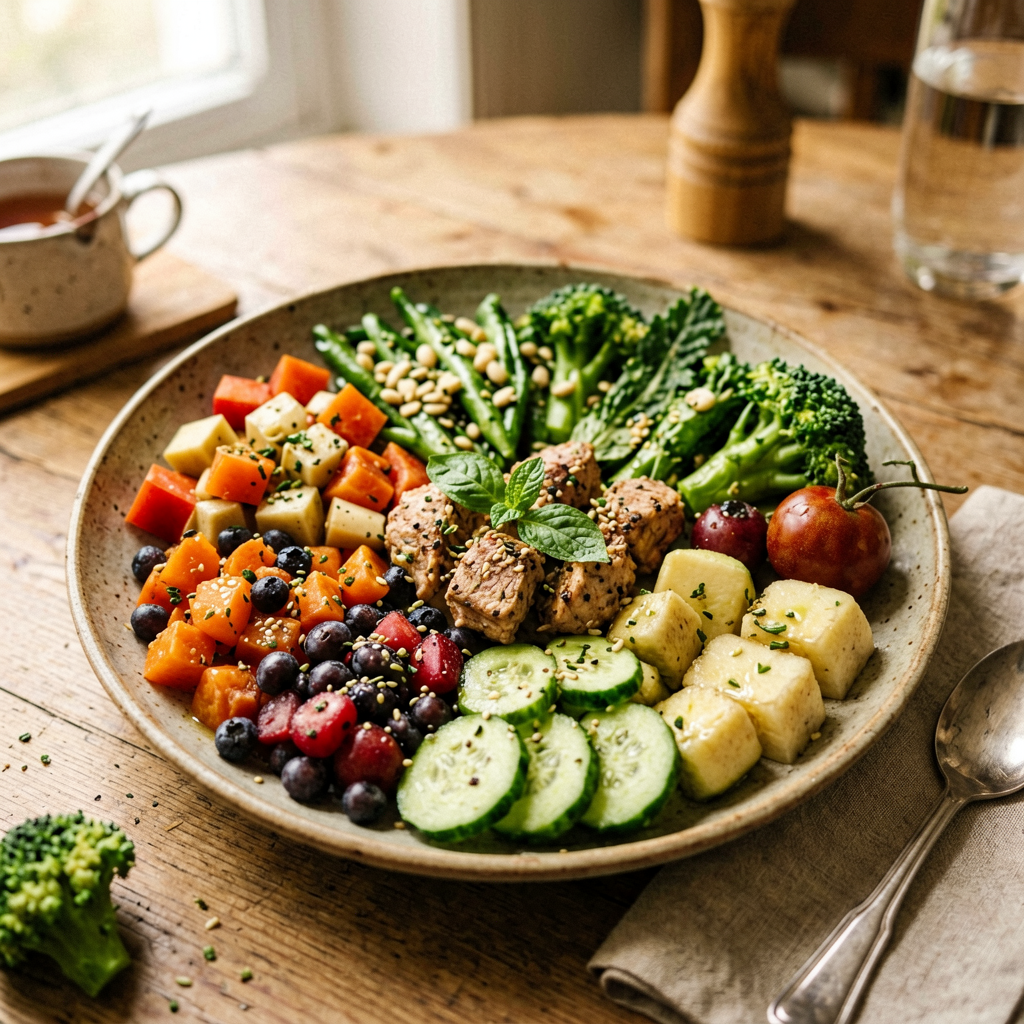
- Eat different kinds of foods, including vegetables, fruits, beans, nuts, seeds, whole grains, and low-fat or fat-free dairy and eggs if your diet includes these.
- Choose fortified foods, such as cereals, breads, soy or almond milk, and fruits juices to get a full range of nutrients.
- Limit foods that are high in sugar, salt (sodium), and fat.
- Include a protein source with all meals.
- If your diet lacks certain vitamins and minerals, take supplements.
- Learn to read the Nutrition Facts Label on food packages. The label tells you the ingredients and nutrition contents of the food product.
- If you follow a more restrictive diet, you may want to work with a dietitian to make sure you are getting enough nutrients.
Lacto-ovovegetarian; Semi-vegetarian; Partial vegetarian; Vegan; Lacto-vegetarian
Barrett KJ, Gilley SP, Haemer MA, Krebs NF, Johnson SL. Feeding healthy infants, children, and adolescents. In: Kliegman RM, St. Geme JW, Blum NJ, et al, eds.
Nelson Textbook of Pediatrics . 22nd ed. Philadelphia, PA: Elsevier; 2025:chap 61.
Hensrud DD. Diet and nutrition. In: Goldman L, Cooney KA, eds.
Goldman-Cecil Medicine . 27th ed. Philadelphia, PA: Elsevier; 2024:chap 13.
Mason JB, Booth SL. Vitamins, trace minerals, and other micronutrients. In: Goldman L, Cooney KA, eds.
Goldman-Cecil Medicine . 27th ed. Philadelphia, PA: Elsevier; 2024:chap 249.
National Institutes of Health website. Office of dietary supplements. Dietary supplement fact sheets.
ods.od.nih.gov/factsheets/list-all/ . Accessed October 21, 2024.
US Department of Agriculture and US Department of Health and Human Services. Dietary Guidelines for Americans, 2025-2030. 10th Edition. January 2026.
www.dietaryguidelines.gov/ . Accessed February 19, 2026.
Updated by: Linda J. Vorvick, MD, Clinical Professor, Department of Family Medicine, UW Medicine, School of Medicine, University of Washington, Seattle, WA. Also reviewed by David C. Dugdale, MD, Medical Director, Brenda Conaway, Editorial Director, and the A.D.A.M. Editorial team.
- Vegetarian Diet
Frequently Asked Questions
Key Takeaways
: You need this vitamin to help prevent anemia and have normal nerve function. : You need this vitamin for bone health.
Function
Food Sources
Young children and teens Pregnant or breastfeeding women Older adults People with cancer and some chronic illnesses Vegetarian diets that include some dairy products and eggs have all the nutrition you need.
Vitamin B12
Eggs Milk, yogurt, low-fat cheese, cottage cheese, and other dairy products Foods that have B12 added to them (fortified), such as cereal and soy products Nutritional yeast Seafood such as clams, salmon, and tuna (this only applies to those who follow a pescetarian or semi-vegetarian diet) 📖 Vitamin D
Vitamin D
About the Author: This article was researched and written by the SilverWell Hub editorial team. It was reviewed by the SilverWell Hub editorial team.
Sources: This article is adapted from MedlinePlus, a service of the National Library of Medicine.
Disclaimer: This information is for educational purposes only. See our full Medical Disclaimer.
Published: July 21, 2026