
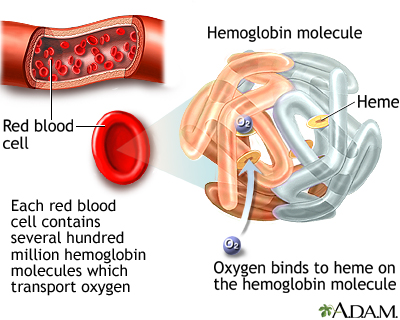
Anemia is a condition in which the body does not have enough healthy red blood cells. Red blood cells provide oxygen to body tissues.
Different types of anemia include:
- Anemia due to vitamin B12 deficiency
- Anemia due to folate (folic acid) deficiency
- Anemia due to iron deficiency
- Anemia of chronic disease
- Hemolytic anemia
- Idiopathic aplastic anemia
- Megaloblastic anemia
- Pernicious anemia
- Sickle cell anemia
- Thalassemia
Iron deficiency anemia is the most common type of anemia.
What Are the Common Causes and Risk Factors?
Although many parts of the body help make red blood cells, most of the work is done in the bone marrow. Bone marrow is the soft tissue in the center of bones that helps form all blood cells.
Healthy red blood cells last between 90 and 120 days. Parts of your body then remove old blood cells. A hormone called erythropoietin (EPO) made in your kidneys signals your bone marrow to make more red blood cells.
Hemoglobin is the oxygen-carrying protein inside red blood cells. It gives red blood cells their color. People with anemia do not have enough hemoglobin.
The body needs certain vitamins, minerals, and nutrients to make enough red blood cells. Iron, vitamin B12, and folic acid are three of the most important ones. The body may not have enough of these nutrients due to:
- Changes in the lining of the stomach or intestines that affect how well nutrients are absorbed (for example, celiac disease )
- A diet deficient in vitamins or minerals
- Surgery that removes part of the stomach or intestines
Possible causes of anemia include:
- Iron deficiency
- Vitamin B12 deficiency
- Folate deficiency
- Certain medicines
- Destruction of red blood cells earlier than normal (called hemolysis which may be caused by immune system problems)
- Long-term (chronic) diseases such as chronic kidney disease, cancer, ulcerative colitis , or rheumatoid arthritis
- Some forms of anemia, such as thalassemia or sickle cell anemia, which can be inherited
- Pregnancy
- Problems with the bone marrow such as lymphoma, leukemia , myelodysplasia, multiple myeloma , or aplastic anemia
- Slow blood loss (for example, from heavy menstrual periods or stomach ulcers )
- Sudden heavy blood loss
What Are the Symptoms and Warning Signs?
You may have no symptoms if the anemia is mild or if the problem develops slowly. Symptoms that may occur first include:
- Feeling weak or tired more often than usual, or with exercise
- Headaches
- Problems concentrating or thinking
- Irritability
- Loss of appetite
- Numbness and tingling
of hands and feet
If your anemia gets worse, symptoms may include:
- Blue color to the whites of your eyes
- Brittle nails
- Desire to eat ice or other non-food things ( pica syndrome)
- Lightheadedness when you stand up
- Pale skin color
- Shortness of breath
with mild activity or even at rest - Sore or inflamed tongue
- Mouth ulcers
- Abnormal or increased menstrual bleeding
📖 What Are Exams and Tests?
What Are Exams and Tests?
Your health care provider will perform a physical exam, and may find:
-
A
heart murmur - Low blood pressure, especially when you stand up
- Slight fever
- Pale skin
- Rapid heart rate
Some types of anemia may cause other findings on a physical exam.
Blood tests used to diagnose some common types of anemia may include:
- Blood levels of iron, vitamin B12, folic acid, and other vitamins and minerals
- Complete blood count
- Reticulocyte count
Other tests may be done to find medical problems that can cause anemia.
📖 How Is It Treated?
How Is It Treated?
Treatment should be directed at the cause of the anemia, and may include:
- Blood transfusions
- Corticosteroids or other medicines that suppress the immune system
- Erythropoietin, a medicine that helps your bone marrow make more blood cells
- Supplements of iron, vitamin B12, folic acid, or other vitamins and minerals
📖 What Is Outlook (Prognosis)?
What Is Outlook (Prognosis)?

The outlook depends on the condition causing it. Your anemia will usually improve when the condition causing it is treated.
📖 What Are Possible Complications?
What Are Possible Complications?
Severe anemia can cause low oxygen levels in vital organs such as the heart and can lead to heart failure .
📖 When to Contact a Medical Professional?
When to Contact a Medical Professional?
Contact your provider if you have any symptoms of anemia or unusual bleeding.
📖 How Is It Prevented?
How Is It Prevented?

Eat a diet that contains at least the recommended daily allowance of vitamins and minerals.
Low red blood cell count
-
 Red blood cells – elliptocytosis
 -
 Red blood cells – spherocytosis
 -
 Red blood cells – multiple sickle cells
 -
 Ovalocytosis
 -
 Red blood cells – sickle and Pappenheimer
 -
 Red blood cells, target cells
 -
 Hemoglobin
 Red blood cells – elliptocytosis
 Red blood cells – spherocytosis
 Red blood cells – multiple sickle cells
 Ovalocytosis
 Red blood cells – sickle and Pappenheimer
 Red blood cells, target cells
 Hemoglobin
Elghetany MT, Banki K. Erythrocytic disorders. In: McPherson RA, Pincus MR, eds.
Henry’s Clinical Diagnosis and Management by Laboratory Methods . 24th ed. Philadelphia, PA: Elsevier; 2022:chap 33.
Lin JC, Benz EJ Jr. Approach to anemia in the adult and child. In: Hoffman R, Benz EJ, Silberstein LE, et al, eds.
Hematology: Basic Principles and Practice . 8th ed. Philadelphia, PA: Elsevier; 2023:chap 35.
Means RT Jr. Approach to the anemias. In: Goldman L, Cooney KA, eds.
Goldman-Cecil Medicine . 27th ed. Philadelphia, PA: Elsevier; 2024:chap 144.
Updated by: Warren Brenner, MD, Oncologist, Lynn Cancer Institute, Boca Raton, FL. Review provided by VeriMed Healthcare Network. Also reviewed by David C. Dugdale, MD, Medical Director, Brenda Conaway, Editorial Director, and the A.D.A.M. Editorial team.
- Anemia
Frequently Asked Questions
Key Takeaways
Treatment should be directed at the cause of the anemia, and may include:
The outlook depends on the condition causing it.
What Are the Common Causes and Risk Factors?
What Are the Symptoms and Warning Signs?
Feeling weak or tired more often than usual, or with exercise Headaches Problems concentrating or thinking Irritability Loss of appetite Numbness and tingling of hands and feet If your anemia gets worse, symptoms may include:
Blue color to the whites of your eyes Brittle nails Desire to eat ice or other non-food things ( pica syndrome) Lightheadedness when you stand up Pale skin color Shortness of breath with mild activity or even at rest Sore or inflamed tongue Mouth ulcers Abnormal or increased menstrual bleeding 📖 What Are Exams and Tests?
What Are Exams and Tests?
A heart murmur Low blood pressure, especially when you stand up Slight fever Pale skin Rapid heart rate Some types of anemia may cause other findings on a physical exam. Blood tests used to diagnose some common types of anemia may include:
Blood levels of iron, vitamin B12, folic acid, and other vitamins and minerals Complete blood count Reticulocyte count Other tests may be done to find medical problems that can cause anemia. 📖 How Is It Treated?
How Is It Treated?
Blood transfusions Corticosteroids or other medicines that suppress the immune system Erythropoietin, a medicine that helps your bone marrow make more blood cells Supplements of iron, vitamin B12, folic acid, or other vitamins and minerals 📖 What Is Outlook (Prognosis)?
About the Author: This article was researched and written by the SilverWell Hub editorial team. It was reviewed by the SilverWell Hub editorial team.
Sources: This article is adapted from MedlinePlus, a service of the National Library of Medicine.
Disclaimer: This information is for educational purposes only. See our full Medical Disclaimer.
Published: July 19, 2026